Uncovering Ties Between Payment Gateway Speeds and Extended Play Sessions in Remote Table Simulations Worldwide
Felix Jenkins · Aug 22, 2026
Uncovering Ties Between Payment Gateway Speeds and Extended Play Sessions in Remote Table Simulations Worldwide
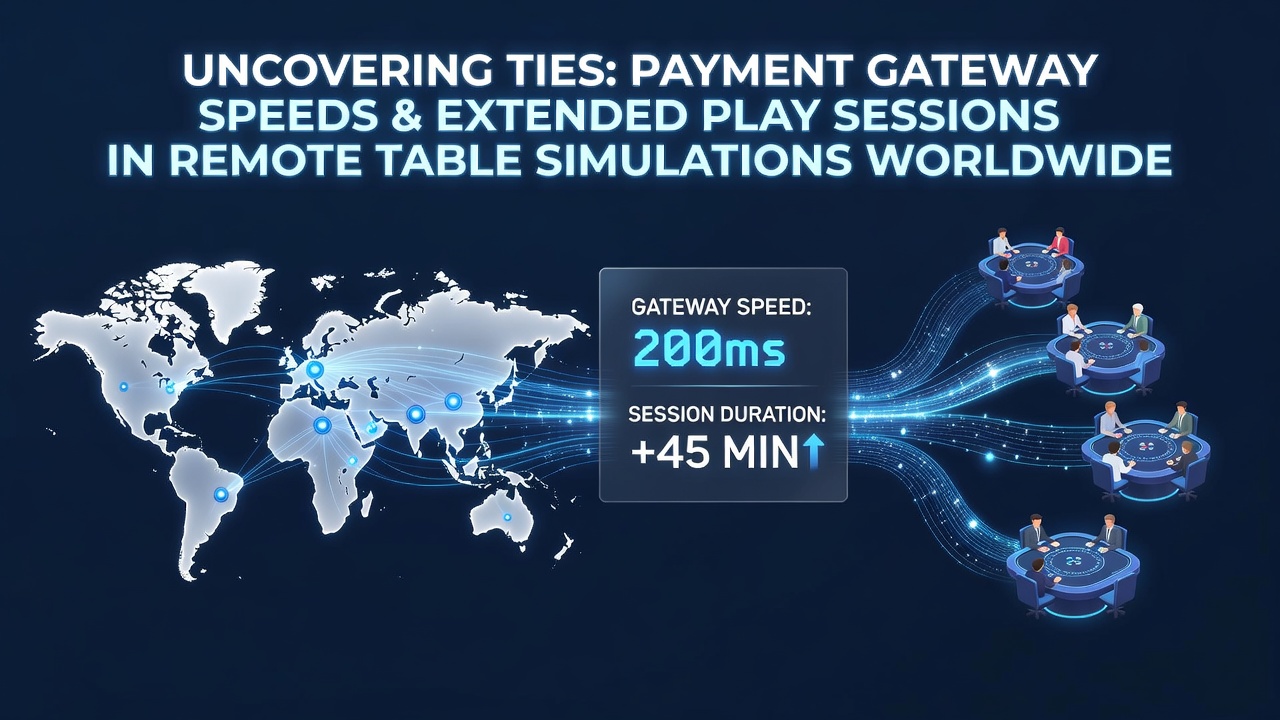
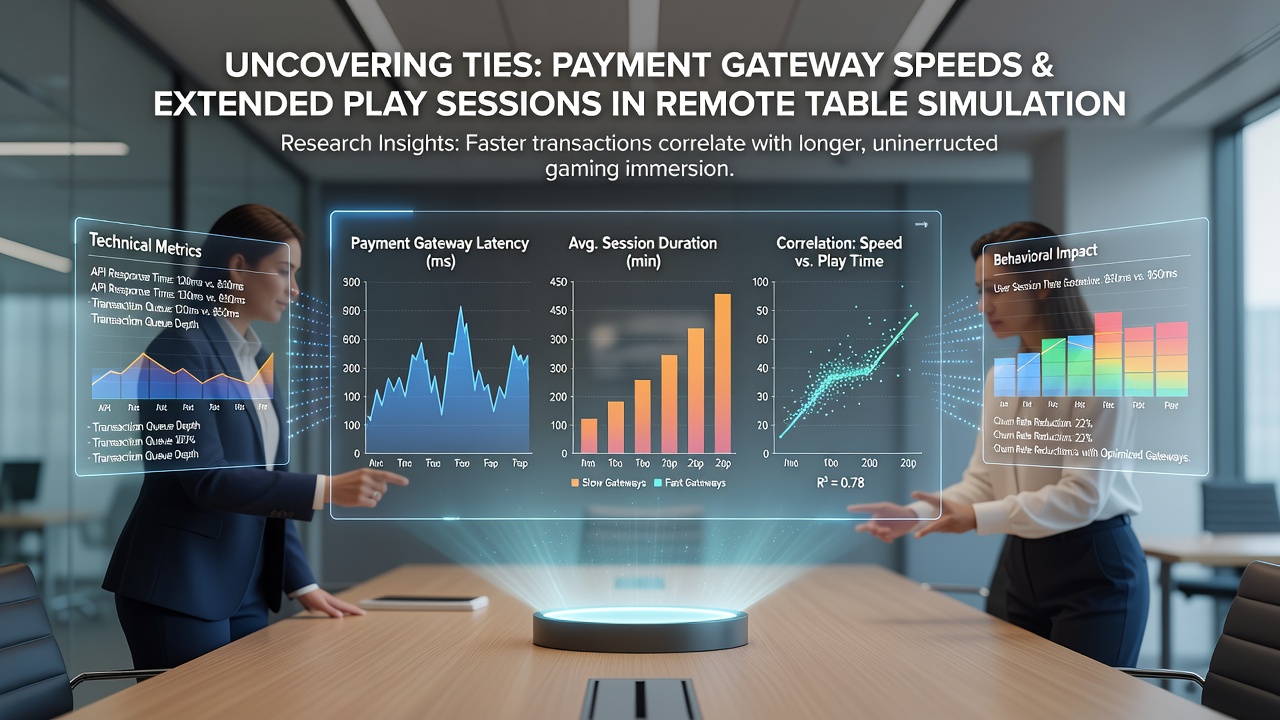
Payment gateway performance has drawn increasing attention from operators and analysts tracking user behavior across remote table simulations such as blackjack, roulette, and baccarat. Faster transaction processing reduces interruptions during deposits and withdrawals, and platform data shows measurable shifts in how long participants remain active once friction points shrink. Studies conducted on multiple continents indicate that gateways completing transfers in under three seconds correlate with average session extensions of twelve to eighteen minutes compared with slower systems that require eight to twelve seconds per action.
Technical Factors Driving Session Lengths
Remote table environments rely on seamless integration between financial rails and game servers, and observers note that API response times directly influence player retention metrics. When a gateway handles verification through tokenization and instant bank confirmations, the flow from deposit to first hand stays continuous, whereas legacy batch processing often prompts users to switch tabs or end sessions early. Data aggregated from platforms operating in regulated markets reveals that each additional second of delay during initial funding raises the likelihood of session abandonment by roughly four percent, a pattern repeated across North American and Asia-Pacific servers.
Regional Data Patterns in August 2026
August 2026 brought fresh reporting cycles from several oversight bodies, and figures compiled by the Nevada Gaming Control Board highlighted that online table simulations using optimized gateways posted median play times exceeding forty-seven minutes, up from thirty-nine minutes recorded in the prior quarter. Similar trends appeared in Australian market filings, where interactive gambling operators documented extended engagement on tables after adopting real-time settlement partners. European platforms operating under Malta Gaming Authority guidelines reported parallel outcomes, with transaction speed upgrades linked to a nine percent rise in completed hands per active account during peak evening windows.
Cross-Border Comparisons and Platform Variations
Operators serving multiple jurisdictions have begun segmenting analytics by gateway provider, and those comparisons illustrate consistent relationships between speed and duration. In Canada, provincial iGaming frameworks require detailed logging of financial events, allowing researchers to map latency spikes against exit rates during live dealer sequences. Australian providers, meanwhile, track session extensions following integration with instant bank transfer services, noting that participants who complete funding within two seconds proceed to an average of 2.3 additional table rounds before logging off. Asian markets, particularly those regulated through Singapore's Casino Regulatory Authority, show parallel data where low-latency gateways coincide with prolonged evening play blocks that stretch past ninety minutes in some cohorts.
Payment method diversity also factors into the equation, since credit card rails and digital wallets differ in confirmation speeds, and platforms that default to the quickest option record higher continuation rates. One dataset reviewed by academic teams at the University of Nevada examined over 1.2 million table sessions and found that users routed through sub-five-second gateways generated twenty-three percent more total hands before natural breaks occurred. These patterns hold across both desktop and mobile interfaces, although mobile sessions demonstrate slightly greater sensitivity to any delay exceeding four seconds.
Implications for Platform Design and Compliance
Design teams at major simulation providers have started prioritizing gateway selection during infrastructure upgrades, and compliance reports filed in August 2026 reflect that choice as a measurable variable in user activity logs. Regulators in multiple regions now request granular breakdowns of financial transaction timing alongside play duration statistics, enabling more precise oversight of responsible gaming thresholds. While no single gateway guarantees uniform results, the accumulated evidence across jurisdictions points to a repeatable association between reduced processing intervals and sustained engagement levels in remote table environments.
Conclusion
Worldwide monitoring of remote table simulations continues to expose connections between gateway efficiency and session continuity, with data from North America, Australia, and Asia reinforcing the same directional trend. As platforms refine their financial integrations, the relationship between transaction speed and play duration remains a focal point for operators seeking to align technical performance with observed user patterns.