Tracing the Migration of Multiplier Mechanics from Vintage Arcade Cabinets into Layered Bonus Structures Within Handheld Reel Platforms Across Regulatory Zones
Paul Hartmann · Jul 30, 2026

Tracing the Migration of Multiplier Mechanics from Vintage Arcade Cabinets into Layered Bonus Structures Within Handheld Reel Platforms Across Regulatory Zones
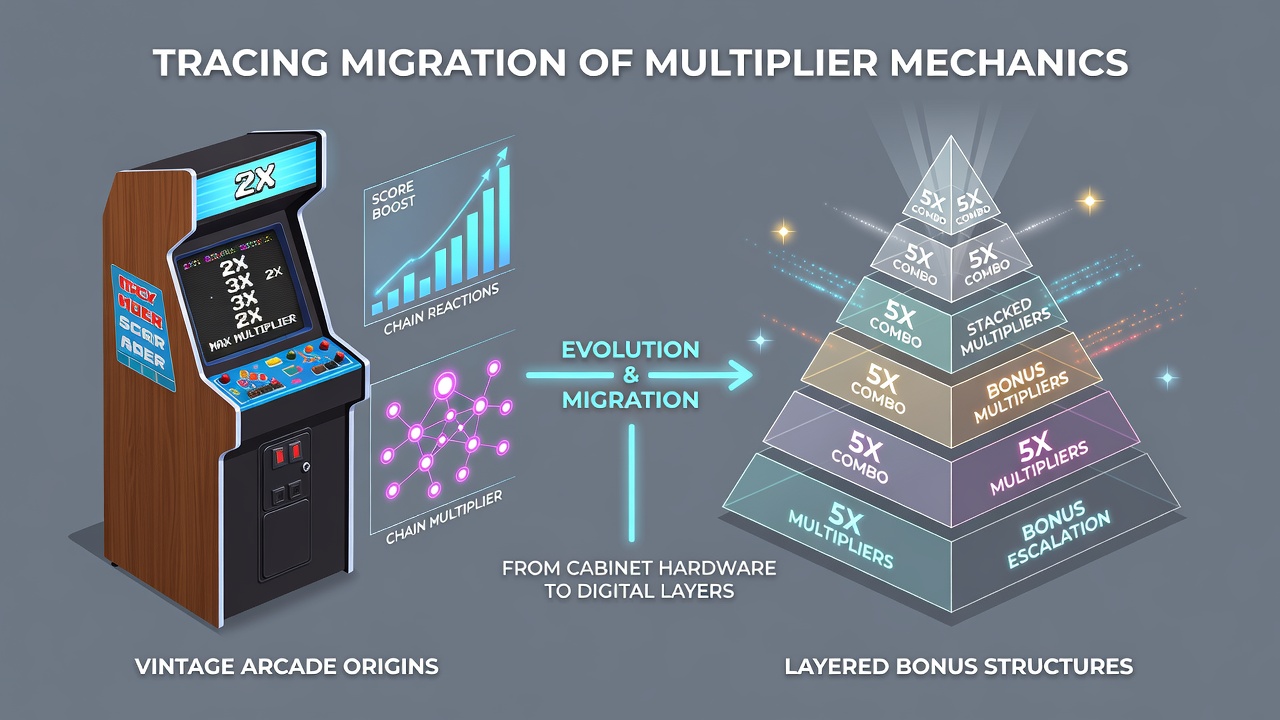
Multiplier mechanics first appeared in mechanical and early electronic arcade cabinets during the mid-20th century, where pinball machines and shooting galleries awarded point multipliers through bumpers, targets, and bonus lanes that scaled scores based on player performance sequences. Those systems relied on physical switches and relay logic to double or triple base values during timed play windows, creating the foundational structure for later digital adaptations in gambling devices.
Early Technical Foundations in Arcade Hardware
Designers at companies such as Bally and Williams incorporated multiplier reels and score wheels that activated under specific conditions, often triggered by completing sequences of lights or drop targets. Data from preserved cabinet schematics shows these multipliers operated on fixed ratios, typically ranging from 2x to 5x, and reset at the end of each ball or game cycle. The same principles transferred to video arcade titles in the 1980s, where on-screen counters applied multipliers to accumulated points during extended play modes.
Adoption in Land-Based Slot Machines
Slot manufacturers began integrating multiplier features into reel-based machines in the 1990s, replacing physical score multipliers with electronic random number generators that applied similar scaling factors to line wins during base game spins or dedicated bonus rounds. Nevada Gaming Control Board records from that period document the approval of progressive multiplier ladders in video slots, where consecutive wins could stack additional factors up to predefined caps. These implementations maintained the core logic of arcade multipliers while adapting them to payout tables governed by jurisdictional return-to-player requirements.
Layered Bonus Structures in Handheld Platforms
Handheld reel platforms extended these mechanics through software layers that combined free spin multipliers, expanding wild multipliers, and progressive jackpot multipliers within single game sessions. Mobile slot titles released after 2015 frequently feature bonus rounds where base multipliers combine with secondary modifiers, producing cumulative values that exceed the simpler 2x or 3x ranges found in earlier cabinets. Regulatory filings in multiple jurisdictions confirm that these layered systems undergo separate certification for each multiplier component to ensure independent random outcomes.
Regulatory Variations Across Jurisdictions
Different regulatory zones impose distinct constraints on how multipliers integrate into bonus structures. Australian state gaming authorities require disclosure of maximum multiplier caps within game rules, while New Jersey Division of Gaming Enforcement mandates that all multiplier functions receive independent laboratory testing before deployment on mobile platforms. Singapore's Casino Regulatory Authority applies additional scrutiny to progressive multiplier networks that link multiple handheld titles, ensuring that cross-game accumulation complies with local prize pool limits. These requirements have shaped the technical architecture of multiplier systems, prompting developers to segment bonus layers into separately auditable modules.
Developments Observed in July 2026
Industry reports compiled in July 2026 indicate continued expansion of multiplier features across handheld platforms operating under updated compliance frameworks in several North American and Asian markets. Figures released by the New Jersey Division of Gaming Enforcement show increased approval rates for games incorporating stacked multiplier sequences, whereas Canadian provincial regulators documented parallel growth in titles that separate multiplier triggers from base reel outcomes. Observers note that these patterns reflect ongoing alignment between legacy arcade-derived mechanics and contemporary software standards enforced across borders.
Technical Migration Patterns
Software engineering teams have replicated arcade multiplier activation sequences using event-driven code that monitors reel combinations and applies scaling factors in real time. This approach preserves the conditional logic of vintage cabinets while accommodating the variable screen sizes and touch interfaces of handheld devices. Research papers published by gaming technology institutes describe how state machines originally designed for physical coin mechanisms now govern digital bonus multipliers, maintaining deterministic behavior under certified random number generator outputs.
Cross-Border Compliance Considerations
Platforms serving multiple regulatory zones maintain distinct multiplier configurations for each jurisdiction, toggling maximum values and activation frequencies according to local statutes. Data compiled by the Gaming Laboratories International group reveals that certification cycles for these adaptable systems typically require separate test suites for each target market, confirming that multiplier calculations remain isolated from player identification or location services. Such segmentation prevents unintended carryover of mechanics across regulatory boundaries.
Conclusion
The progression of multiplier mechanics from arcade cabinets to layered handheld bonus structures demonstrates consistent technical inheritance across decades of hardware and software evolution. Regulatory frameworks in different zones continue to influence implementation details, requiring segmented certification and capped values that trace directly back to the fixed-ratio systems first engineered for physical arcade play. Current deployment data from July 2026 underscores the sustained presence of these migrated features within certified mobile reel platforms operating under varied compliance regimes.