Mapping Historical Rituals to Modern Mechanics in Electronic Table Simulations Worldwide
Finley Schmitt · Jun 18, 2026
Mapping Historical Rituals to Modern Mechanics in Electronic Table Simulations Worldwide
Historical rituals surrounding table games have shaped player behaviors for centuries, and electronic table simulations now incorporate many of those same elements through coded mechanics that replicate physical actions while adapting them for digital interfaces. Observers note that practices once tied to superstition or social ceremony find direct counterparts in animation sequences, sound cues, and interaction patterns used in platforms operating across multiple continents.
Origins of Ritual in Physical Table Games
Early dice games in ancient civilizations involved specific tossing techniques and verbal invocations meant to influence outcomes, while card games in later periods featured shuffling methods and cut rituals performed to ensure fairness or bring luck. These actions carried cultural weight in regions from East Asia to the Mediterranean, where communities passed down precise gestures and timing conventions that became standardized over generations.
Data from gaming archives shows that roulette wheels in 18th-century Europe prompted players to observe spin directions and dealer mannerisms as part of an informal code, whereas blackjack tables in North American establishments developed their own etiquette around card handling and betting placement. Such patterns established expectations that digital versions later needed to address when converting table experiences into screen-based formats.
Translation of Rituals into Digital Code
Electronic table simulations map these traditions by programming equivalent sequences, such as virtual dice rolls that follow weighted animation paths or card shuffles that display multiple riffle stages before revealing results. Developers integrate audio layers that echo the clatter of physical dice or the snap of cards, creating continuity for users familiar with land-based environments.
Research from institutions in Canada indicates that player retention improves when simulations preserve recognizable pacing, including pauses that mimic dealer deliberation or communal betting rounds. In June 2026, platforms serving Australian and Asian markets continue to refine these mappings, adjusting timing parameters based on usage logs collected from multi-region servers.
Regional Adaptations Across Platforms
North American operators emphasize rapid transitions between rounds while retaining visual nods to traditional chip handling, whereas European systems often extend animation cycles to reflect slower ceremonial styles observed in older casino halls. Asian markets incorporate elements drawn from mahjong tile rituals, translating stacking and revealing motions into touchscreen gestures that maintain cultural resonance.
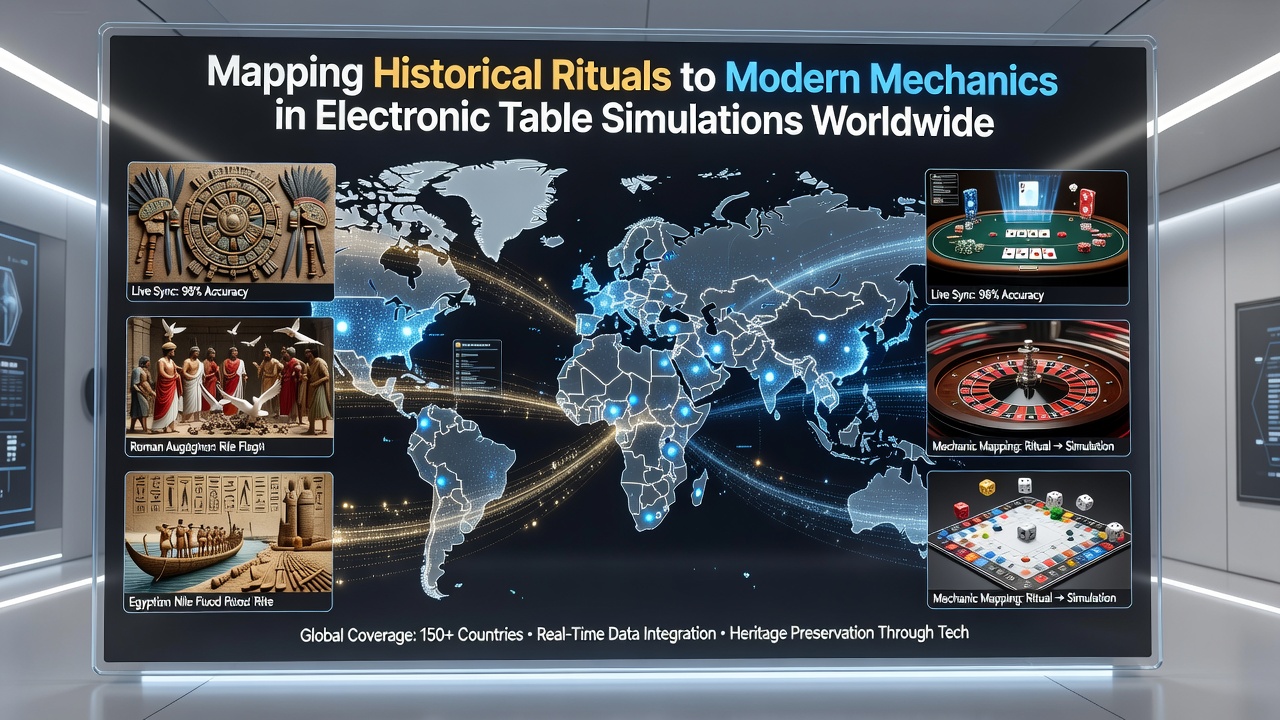
According to reports issued by the Australian Gambling Research Centre, simulation engines in that region prioritize sound design that echoes historical dice cup usage, helping bridge generational gaps among participants. In contrast, systems regulated under Nevada oversight focus on precise replication of wheel physics to satisfy compliance standards that reference legacy equipment specifications.
Technical Implementation and Global Standards
Engineers achieve these mappings through modular code structures that allow regional customization without altering core random number generation protocols. Animation libraries store gesture data collected from ethnographic studies, then apply interpolation algorithms to produce fluid motion on varying screen sizes and input methods.
Figures released by the Canadian Gaming Association reveal steady growth in simulation titles that embed customizable ritual settings, enabling players to select animation speeds or audio intensity levels. These options trace back to documented practices observed in different cultural contexts, ensuring the mechanics remain grounded in observable history rather than arbitrary design choices.
Platforms active in June 2026 demonstrate expanded use of haptic feedback on mobile devices, replicating the tactile sensation of handling cards or tokens that once formed part of live table ceremonies. Integration occurs through API connections that sync device capabilities with game logic, maintaining consistency across operating systems used worldwide.
Conclusion
Electronic table simulations continue to evolve by embedding historical ritual elements into their foundational mechanics, drawing from documented practices across continents to create familiar yet accessible experiences. Regulatory frameworks in multiple jurisdictions support these developments by requiring transparency in how random outcomes align with established game rules, while technical standards ensure that cultural references remain accurate and respectful of their origins. As adoption expands through 2026, the mapping process relies on ongoing data collection from diverse user bases to refine connections between past conventions and present-day interfaces.